
Why Green Lighting and Ventilation Matter for a Healthy Home
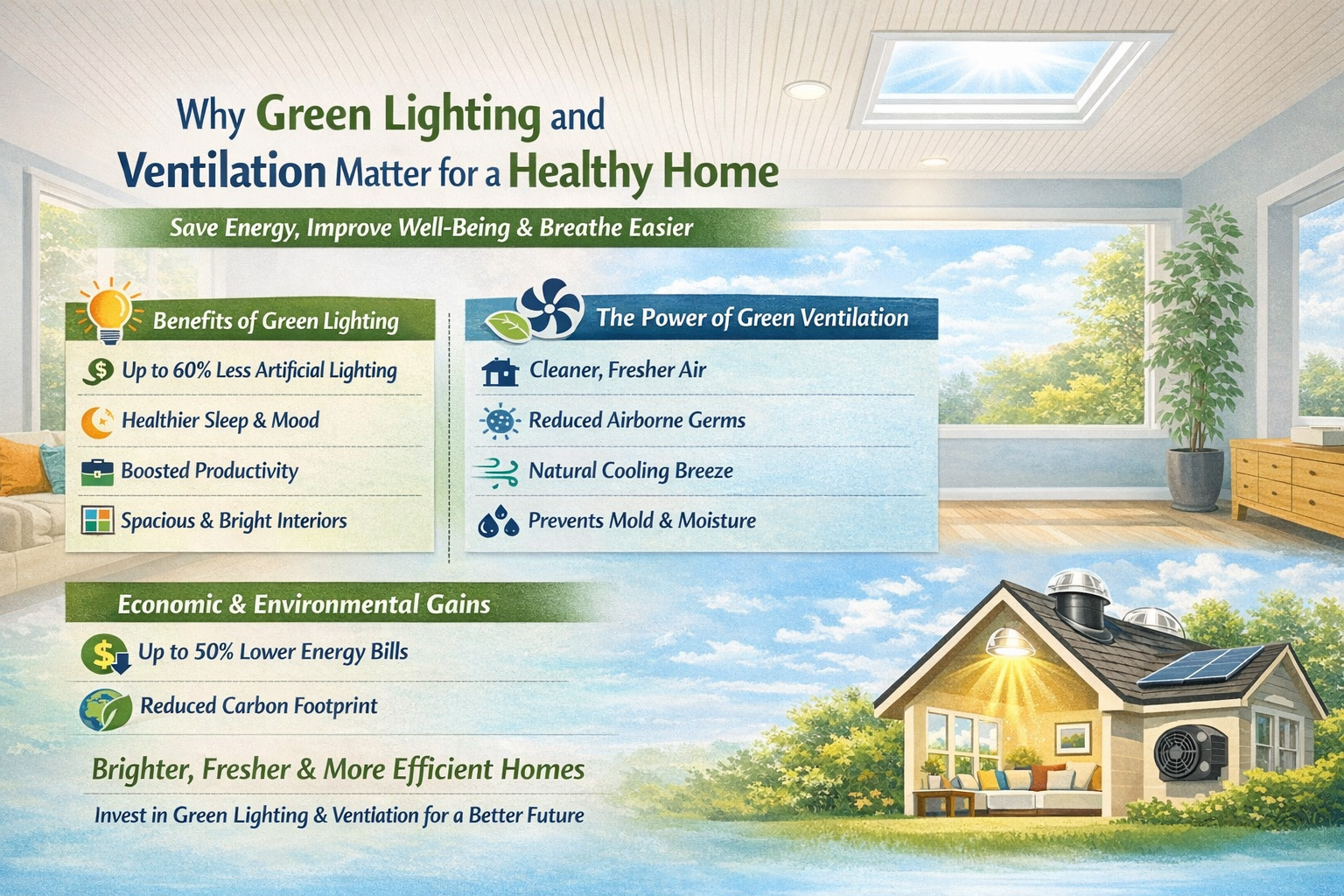
Green lighting and natural ventilation work together to create buildings that feel better, function better, and cost far less to operate. When spaces are designed to use daylight, fresh air, and efficient technologies, the result is a healthier indoor environment and a dramatically smaller environmental footprint. The shift toward these “green” strategies isn’t just a design trend-it’s a practical response to rising energy costs, climate concerns, and growing awareness of how indoor environments affect human well‑being.
Green lighting blends two powerful tools: abundant natural daylight and highly efficient artificial lighting such as LEDs. Green ventilation improves the indoor air to create a healthier environment for the occupants of the building. Together, they transform how a space looks, feels, and performs.
Why Green Lighting Matters
- Energy Efficiency That Shows Up on the Bill: Daylighting can cut the need for artificial lighting by as much as 60%, especially in homes and offices with well‑placed windows, skylights, and reflective surfaces. When artificial lighting is needed, LEDs step in with up to 90% lower energy use compared to incandescent bulbs and a lifespan that can stretch 25 times longer. This combination reduces electricity consumption and lowers long-term maintenance costs. Tubular skylights with LEDs for night use are the latest development in daylighting.
- Better Health through Better Light: Sunlight is more than illumination-it’s a biological necessity. Exposure to natural light helps the body produce vitamin D, which supports immunity and bone strength. Sunlight also regulates the circadian rhythm, the internal clock that governs sleep cycles, mood, and hormonal balance. People who work in naturally lit spaces often report better sleep, improved mood, and fewer symptoms of seasonal affective disorder.
- Sharper Thinking and Higher Productivity: Studies consistently show that natural light boosts cognitive performance. Workers in bright, daylight‑rich environments experience fewer headaches and less eye strain with productivity gains ranging from 5% to 40%. Students in naturally lit classrooms also tend to perform better academically, highlighting the universal benefits of good lighting.
- A More Spacious, Uplifting Atmosphere: Design elements like clerestory windows, skylights, and light shelves distribute daylight deeper into a room, making interiors feel larger and more open. This not only enhances aesthetics but also increases the perceived value of a property.
Why Green Ventilation Is a Game-Changer
Green ventilation used to mean applying natural forces-wind, pressure differences, and temperature variations-to move air through a building to improve indoor air quality. While this principle still holds, the advent of energy-efficient and solar-powered ventilation fans means that green ventilation is now possible when natural forces cannot move or circulate indoor air.
- Cleaner, Healthier Indoor Air: Fresh air circulation helps flush out pollutants such as VOCs, dust, allergens, and bacteria. This reduces the risk of “sick building syndrome”, a condition where occupants experience headaches, fatigue, and respiratory irritation due to poor indoor air quality.
- Lower Risk of Airborne Diseases: Good ventilation dilutes and disperses airborne pathogens, lowering the chances of transmission for illnesses like tuberculosis, influenza, and COVID‑ This makes natural ventilation especially valuable in schools, offices, and healthcare settings.
- Cooling Without the Electricity Bill: Cross-ventilation, air entering from one side and exiting from the opposite, creates a natural breeze that cools interiors. Stack ventilation uses the principle that warm air rises, allowing it to escape through high openings while drawing in cooler air from below. Both methods reduce the need for air conditioning, cutting energy use and improving comfort.Attic fans are the ideal way to enhance the effect of stack ventilation and all the environmental and economic benefits it offers.
- Protecting the Building Itself: Moisture is one of the biggest threats to building durability. Proper airflow prevents condensation, mold growth, wood rot, and termite activity. Over time, this extends the lifespan of structural materials and reduces repair costs.
The Bigger Picture: Economic and Environmental Gains
Homes and buildings that combine green lighting and ventilation often see electricity bills drop by nearly half. They also produce fewer greenhouse gas emissions, contributing to a more sustainable built environment. On the real estate front, bright, airy, well‑ventilated spaces consistently attract higher resale values and sell faster than dark, enclosed properties.
Solatube is the world leader in green lighting and ventilation. The company’s premier dealer, Sunlight Concepts, offers the full range of Solatube products along with quick and clean installation. Contact Sunlight Concepts and use the free consultation offer to get all the information you need on green lighting and ventilation so that you can make the right decisions for your home and family.
Frequently Asked Questions
- What is green lighting in a home?
Green lighting uses natural daylight and energy-efficient bulbs like LEDs to reduce energy use and improve indoor comfort. - How does ventilation improve home health?
Proper ventilation removes indoor pollutants, controls moisture, and improves air quality, reducing the risk of allergies and respiratory issues. - Can green lighting reduce electricity bills?
Yes. Natural daylight and LED lighting significantly reduce electricity consumption and long-term energy costs. - Why is natural light important for health?
Sunlight supports vitamin D production, improves mood, regulates sleep cycles, and boosts overall well-being. - How does ventilation help prevent mold and termites?
Good airflow reduces moisture buildup, which prevents mold growth and creates an environment less suitable for termites. - What is the difference between natural and mechanical ventilation?
Natural ventilation uses airflow from outside, while mechanical ventilation uses fans or systems to circulate air indoors. - Are ventilation fans necessary for modern homes?
Yes. Ventilation fans help maintains airflow when natural ventilation is not sufficient, improving air quality and comfort. - Where can I find green lighting and ventilation solutions?
You can explore advanced daylighting and ventilation solutions through trusted providers like Sunlight Concepts, offering expert consultation and installation.